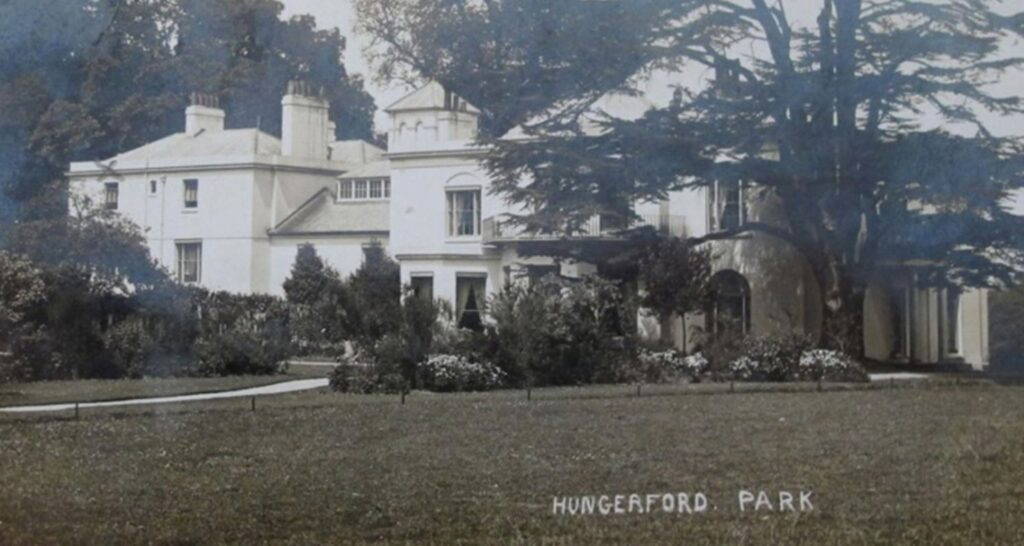
Hungerford Park dates back to the 13th century, when Simon de Montfort created a royal deer park with gifts from King Henry III. Over the centuries it passed through noble families, hosted Queen Elizabeth I, and later became home to grand country houses and estates. Although much of the original mansion was demolished in the mid-20th century, today the park has been reimagined with orchards, woodlands, and holiday cottages, keeping its rich heritage alive.
A Brief History of Hungerford Park
1246-1249
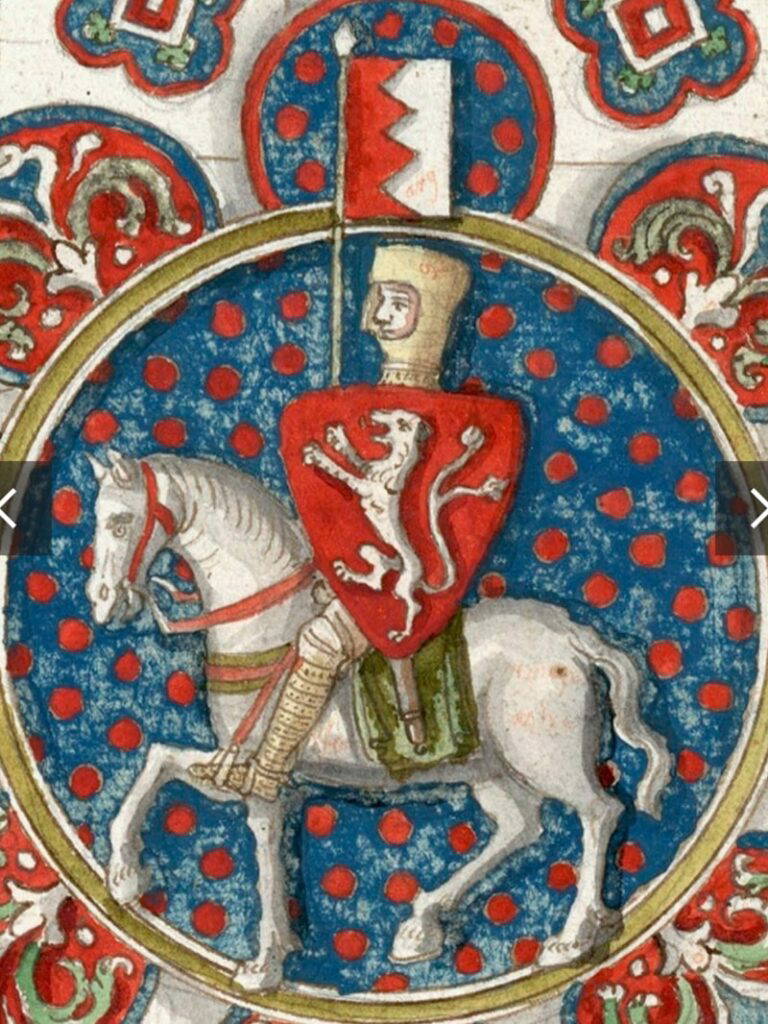
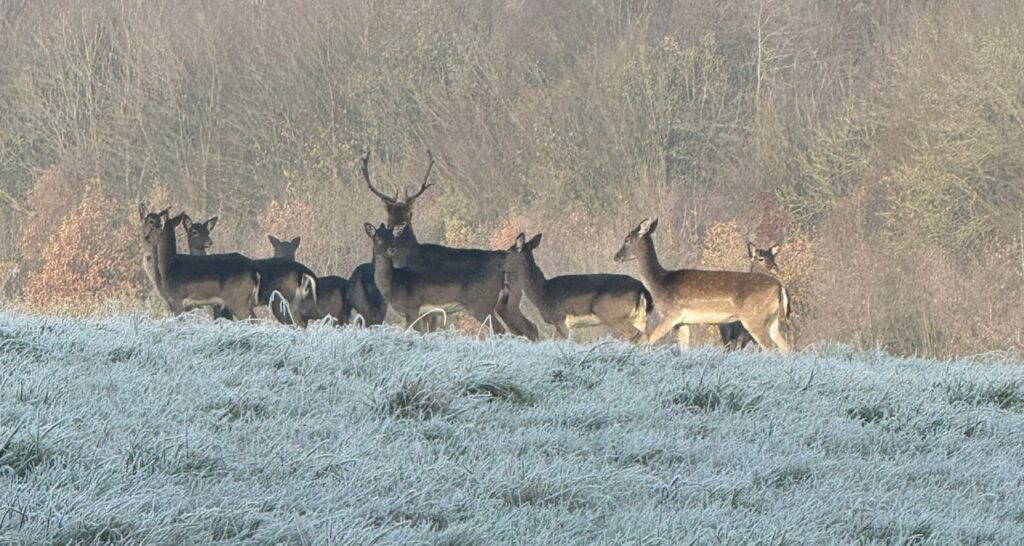
Simon de Montfort received a license to enclose Buteley Wood part of the Savernake Forest and develop it into a deer park, potentially including a hunting lodge. King Henry III made gifts of twenty deer to his sister Eleanor (Simon’s wife) for the park.
1265
Montfort was killed at the battle of Evesham and the park fell into Royal hands.
1400
Henry IV granted the park to Sir Walter Hungerford, a distinguished soldier.
1461
Edward IV gave the park to the Duke of Somerset and all its manorial rights reverted to the Crown.
1586
The Royal deer park was in serious decline, trees had been felled and the number of deer plummeted to 66. Queen Elizabeth I invested heavily in the park.
1591
The Earl of Essex’s steward, Henry Sadler, and his wife, Philippa, leased the property and renovated the parkland with coppices of oak and ash trees and built a new lodge. There were 140 deer contained in the 300 acres.
1595
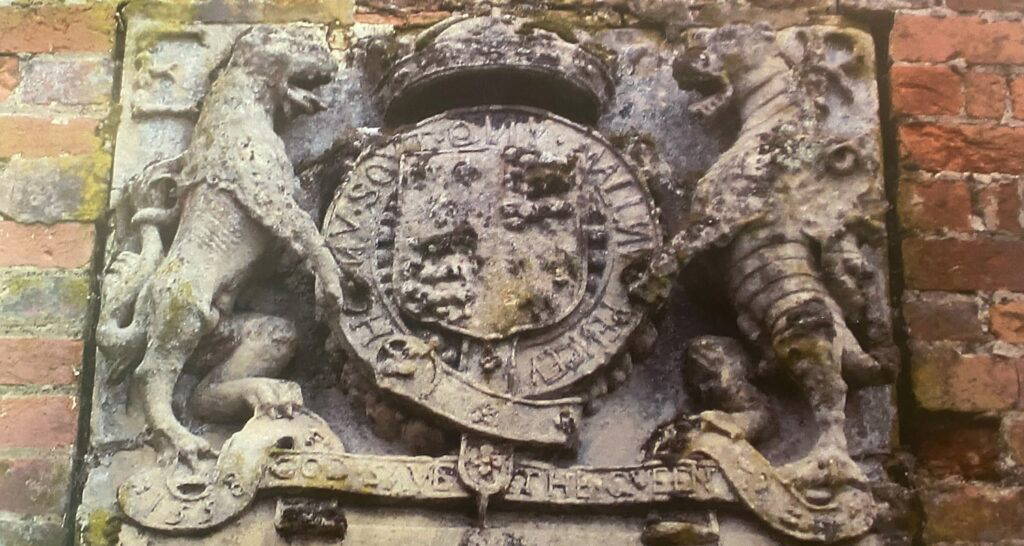
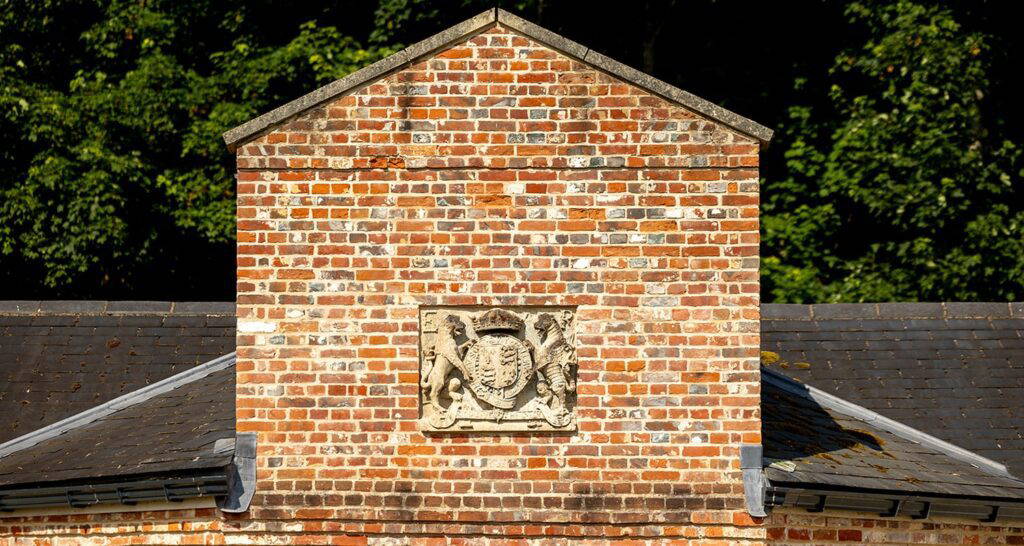
The Queen granted Hungerford Park to her favourite Robert Devereaux, who expanded the lodge. The Royal arms of his patroness was displayed at the east end and Queen Elizabeth is thought to have attended the chase.
1657
Thomas Hussey Esq, MP for Whitchurch, resided at Hungerford Park followed by the family of Boyland.
1663
James Herbert Esq owned the Park for 21 years
1707
It passed to the Stonehouse family. Their cousins owned Radley Hall now known as Radley College.
1754
Edward Trelawny Esq British Governor of Jamaica reputedly died at Hungerford Park. His family were referenced in the novel Treasure Island.
1765
The house was owned by Issac Renou; the large two winged east facing dwelling was set between tree lined avenues and formal gardens.
1769
Renou declared bankrupt and the estate was sold to Mr Waters.
1787-1796
Charles Dalbiac owned the estate and he pulled down the Tudor house and replaced it with an Italian style villa, surrounded by neat pleasure grounds and cultivated land.
1796
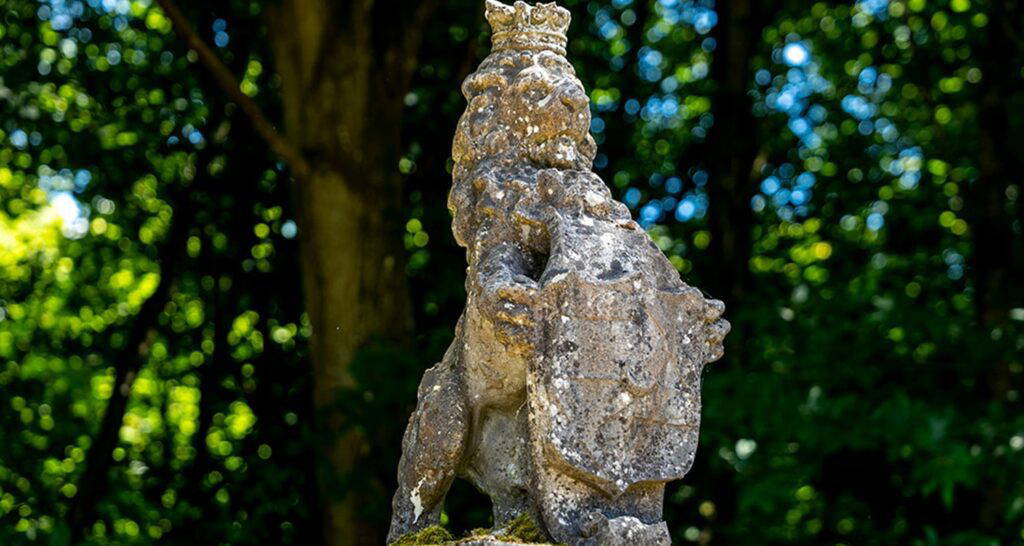
The Willes family rebuilt the ancillary buildings including the Well House, a charming little red brick octagonal building with side chambers, in a muted classical style, standing over an 111ft deep well. Within its gable, it sports a sculptured arms of Elizabeth I, probably the one that graced the original house.
1850
Thomas Cubitt, the architect who is famous for changing the face of London by constructing Belgravia Square and Euston Station, remodelled the house into an Italian styled villa.
1908-1928
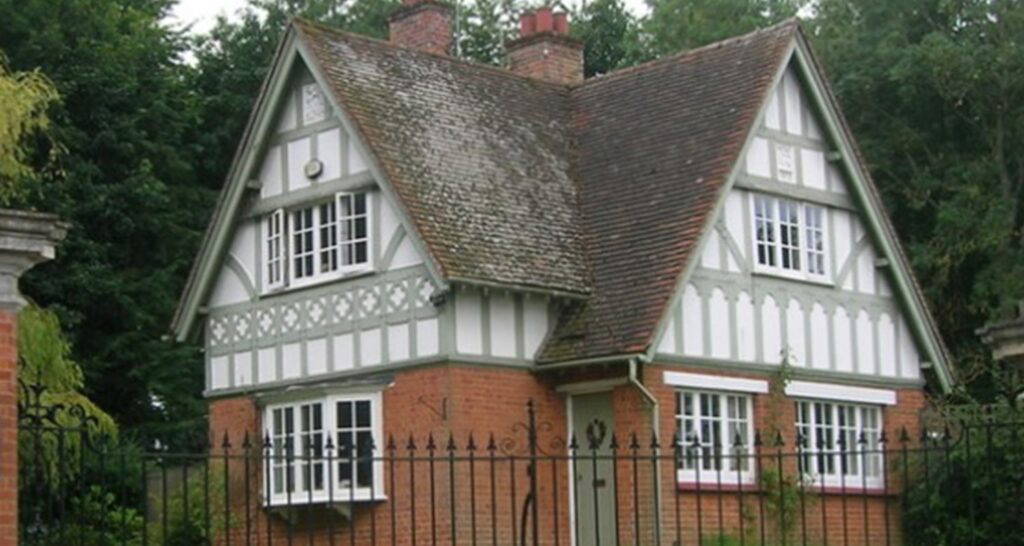
It was owned by Colonel Walmesley who built North and West Lodge
1928
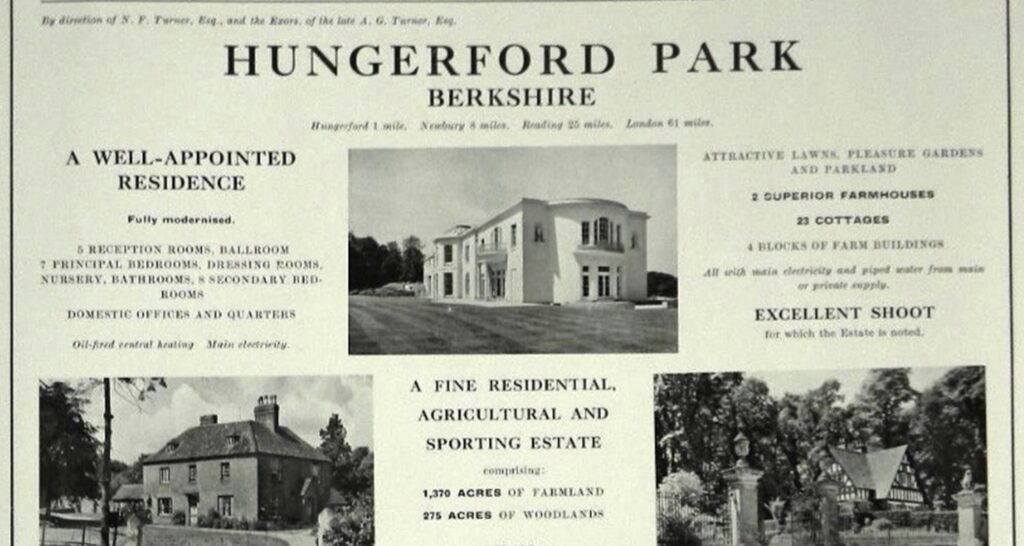
It was sold as part of the Inglewood Estate to Alfred Geoffrey Turner who added a grand ballroom and it became a country house with significant alterations in 1934. The Parkland was magnificently timbered. Hungerford Park Farm included a brick built house with four bedrooms, three cottages, dairy, cowshed, piggeries, poultry house, barn, cart shed and pond.
1934
A grand ballroom was added
1958
It was sold to Lord Howard de Walden from Avington Manor and the house and almost all associated buildings were demolished in 1960. The land was used as part of the Hungerford Park Shoot, with pheasants reared in the walled garden and the woods.
2005
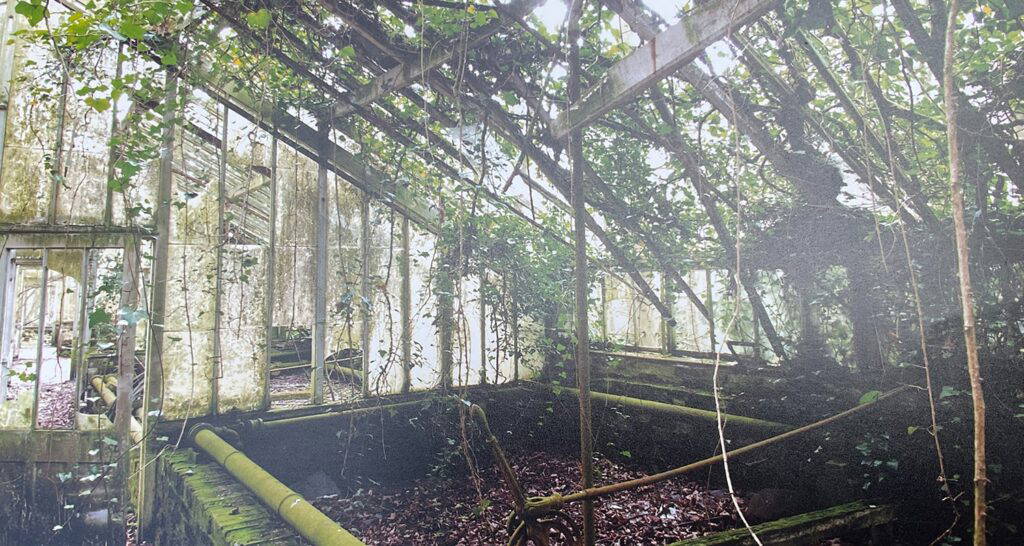
Toby and Emma Hunter and family purchased the original 300 acreage of Hungerford Park with 5 let cottages, North Lodge at the entrance and planning consent for PPS7. Acres of ragwort set aside have been returned to grassland with post and rail fencing. Hedgerows and trees planted including the oak avenue drive. The cottages have all been renovated, the derelict dairy converted into stables and the old taller barns relocated and replaced away from the skyline in Cider yard. Apple orchards were planted and the walled garden has also been reclaimed from its abandoned condition. The remains of the original well house has been rebuilt with the original Hungerford park well visible in the centre as a memory of years gone by. The exceptional water once supplied by a hornby engine is still pumped to provide water to the Park.